
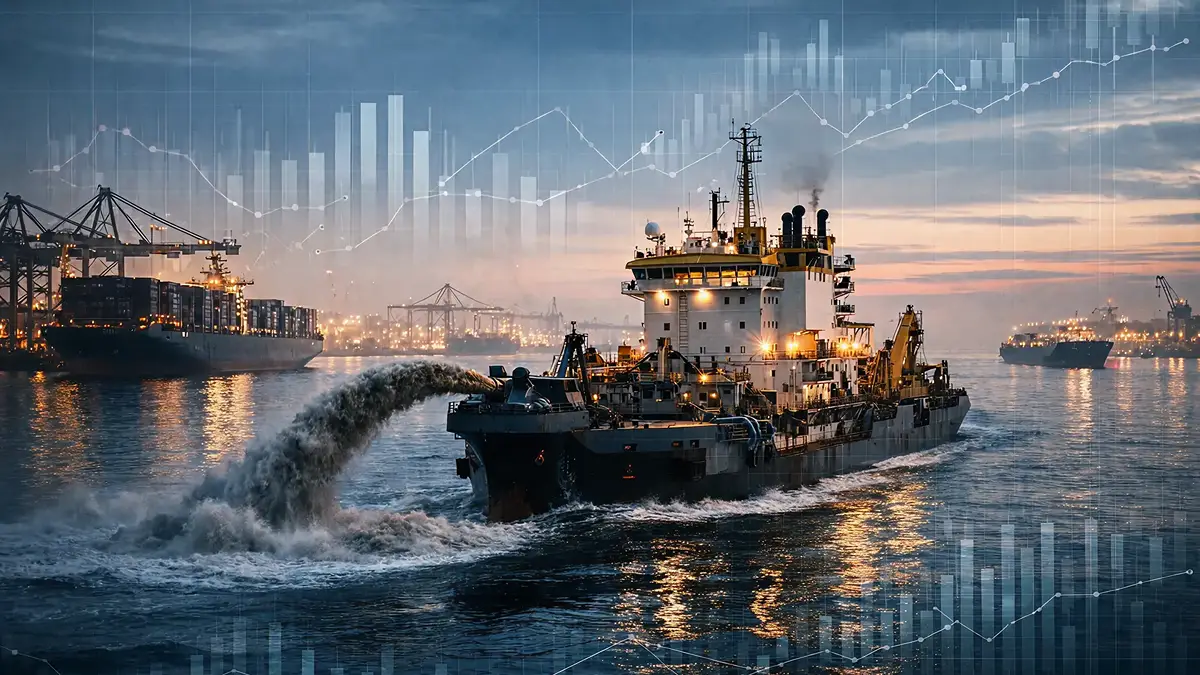
The global dredging market is rarely talked about unless something breaks. A port can’t handle traffic. A channel fills faster than expected. Coastal flooding becomes harder to control. But dredging is always there in the background, quietly holding systems together.
Ports, harbors, and inland waterways don’t stay functional on their own. Sediment keeps moving. Water depths change. Coastlines shift. Dredging exists because nature never stops, and trade can’t afford delays.
What makes the period from 2026 to 2030 different is timing. Infrastructure expansion, climate planning, environmental regulation, and capital investment are all colliding in the same window. These are not quick decisions. Once made, they shape trade routes, port performance, and coastal resilience for years.
That’s why realistic market forecasts 2026-2030 and grounded analyst insights matter more than polished projections. Port authorities, contractors, investors, and policymakers use them to decide what moves forward and what waits. PD Wire fits into this space as a practical marketplace for pump and dredge news, industry data, and forward-looking analysis meant to support real decisions, not just reports.
- Global Dredging Market Overview
- Key Drivers Influencing the Dredging Market (2026–2030)
- Technology Trends Reshaping the Dredging Market
- Market Segmentation and Forecast Insights
- Competitive Landscape and Analyst Insights
- Challenges and Constraints Affecting Market Forecasts
- Future Outlook: 2026–2030 Opportunity Landscape
- Strategic Planning Imperatives Through 2030
Global Dredging Market Overview
Before looking ahead, it helps to slow down and look at where the dredging market already is. Forecasts only make sense when the recent past is clear.
Historical Market Performance (2020–2025)
The years before 2025 were not smooth. Activity dropped, restarted, adjusted, and then stabilized. Once global trade began moving normally again, spending on ports, waterways, and coastal protection returned. Dredging followed that recovery.
Most research sources agree on one thing. The dredging sector is not small. Even with different counting methods, the numbers consistently place the global dredging market in the tens of billions of dollars by the mid-2020s.
Some estimates put the market value at around USD 10.56 billion in 2024, rising to about USD 10.84 billion in 2025. Other studies report higher figures, above USD 17.5 billion in 2025. The gap comes from what is included: port expansion, coastal protection, inland waterways, or all three together.
What stays consistent across these numbers is the structure of demand. Maintenance dredging makes up the bulk of regular activity. Sediment continues to accumulate, and channels cannot be ignored. Capital dredging appears less often but carries high value when ports are deepened or expanded. Environmental dredging remains smaller, but it is no longer marginal, especially where restoration and regulation intersect.
This recent pattern explains why current market forecasts for 2026-2030 are built on continuity rather than sudden change.
Market Forecasts for 2026–2030
Because different analytic methodologies yield varying estimates, it is useful to consider a range of model outcomes:
- One market model projects the global dredging market will grow steadily from a 2025 baseline, reaching valuations aligned with long-term infrastructure demand.
- Other sources estimate the dredging market will reach USD 24.8 billion by 2034, implying moderate annual growth through 2030.
While specific forecast data for 2026-2030 are not published in all sources, most models indicate a continued upward trend in overall market size. These projections incorporate routine maintenance dredging as a consistent baseline, along with additional capital dredging linked to port expansion and resilience spending.
Parallel to the broader dredging sector, the dredging equipment market — the machinery and systems that power dredging operations — is also projected to grow significantly. For instance, forecasts project the global dredging equipment market at USD 5.15 billion in 2024, rising to USD 7.36 billion by 2030, with a CAGR of 6.1%.
Taken together, these projections reinforce a simple point. The dredging market is expected to grow because it is tied to long-term needs rather than short-term cycles. That is why analyst insights focus more on the sustainability of demand than on headline growth rates.
Key Drivers Influencing the Dredging Market (2026–2030)
Demand in the dredging market over the next few years is not coming from a single source. It is being pushed by several structural forces that tend to move slowly but rarely reverse.
Expansion of Global Maritime Trade
Seaborne trade continues to grow, even amid uncertain global conditions. Supply chains adjust, but they do not shrink in a way that removes the need for ports. As vessels increase in size, access channels need to be deeper and more stable. That requirement alone keeps dredging activity consistent.
In many cases, even small changes in ship size or port traffic require additional dredging. Depth margins become tighter, and maintenance cycles shorten. This keeps baseline demand intact.
Port Modernization and Capacity Expansion
Ports are not only expanding; they are upgrading. Investments aimed at improving turnaround times, berth efficiency, and connectivity often require dredging as a first step. Without it, other upgrades simply do not work.
Public funding and private capital are both active here, particularly in Asia and North America. Dredging is rarely the headline item in these programs, but it is usually part of the foundation.
Coastal Protection and Climate Adaptation
Climate pressure is no longer theoretical. Coastal flooding, erosion, and storm damage are already shaping infrastructure budgets. Many protection projects rely on dredging to move sediment, reinforce shorelines, and manage water flow.
As sea levels rise, this work becomes recurring rather than temporary. That shift is already visible in planning documents and reflected in long-term market forecasts 2026-2030.
Offshore Energy and Subsea Infrastructure
Offshore wind, subsea cables, and energy platforms all require seabed preparation. Dredging supports foundation installation, trenching, and ongoing maintenance. Oil and gas infrastructure still contributes to demand, even as energy mixes change.
These areas often appear in analyst insights as evidence that the dredging market is no longer tied only to ports and shipping.
Technology Trends Reshaping the Dredging Market
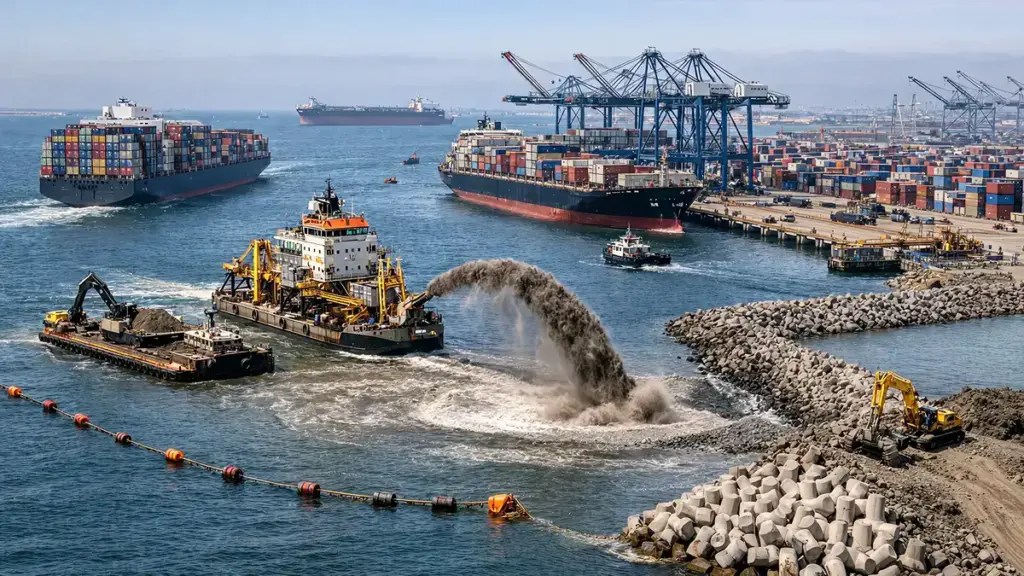
Technology is changing the dredging market, but not in dramatic leaps. It is happening quietly, project by project, through better planning tools, improved equipment, and tighter environmental controls. Over time, these changes shape costs, timelines, and how work is awarded, which is why they matter in long-term market forecasts 2026-2030.
Automation and Digital Systems
Digital systems are now part of everyday dredging operations. GPS positioning, real-time monitoring, and data-driven planning tools help operators control depth more precisely and reduce rework. This does not eliminate human decision-making, but it does reduce uncertainty on site.
For contractors, these tools make schedules more predictable. For clients, they improve transparency. That shift affects how projects are priced and how risk is shared, something often highlighted in analyst insights.
Sustainable and Eco-Focused Practices
Environmental pressure has reshaped how dredging is done. Projects increasingly specify limits on turbidity, sediment handling, and habitat disruption. In response, contractors are adapting methods rather than resisting them.
Sediment reuse, controlled disposal, and lower-impact dredging techniques are becoming normal requirements, not exceptions. These practices add cost in some cases, but they also open new service segments, especially in regulated regions.
Equipment Innovation
Equipment design continues to evolve in practical ways. Higher-capacity cutter suction dredgers, modular systems for inland waterways, and more fuel-efficient engines are now common areas of investment.
This trend is reflected in the equipment segment itself, which is projected to reach USD 7.36 billion by 2030. That growth shows where capital is being directed: toward reliability, flexibility, and compliance rather than experimental technology.
Together, these trends explain why technology is not just a support function in the dredging market, but a factor shaping competitiveness and long-term demand.
Market Segmentation and Forecast Insights
Looking at the dredging market in aggregate hides important differences. Demand, pricing, and risk vary depending on the type of dredging, the application, and who is paying for the work. Breaking the market down helps explain why growth looks steady rather than dramatic in most 2026-2030 market forecasts.
By Dredging Type
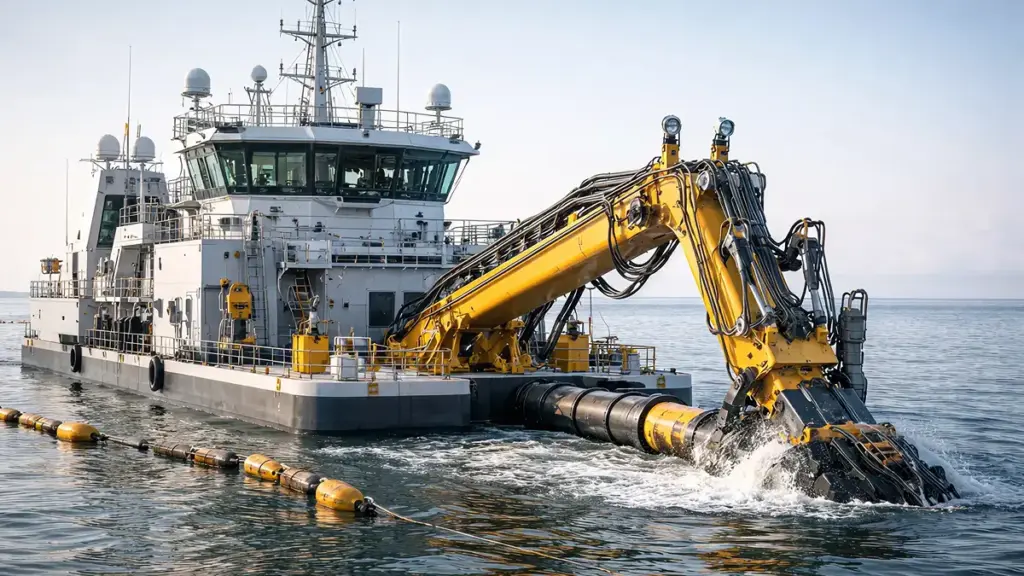
- Cutter Suction Dredging: Key for large capital works and precision deepening.
- Trailing Suction Hopper Dredging: Dominant in maintenance dredging.
- Mechanical and Environmental Dredging: Growing in remediation and eco-projects.
These segments reflect differing demand patterns and price structures across project categories.
By Application
- Harbor & Port Dredging remains the largest by revenue, driven by ongoing accessibility requirements.
- Inland Waterways are gaining attention with transport and logistics strategies.
- Coastal Protection & Land Reclamation are major growth drivers due to climate adaptation.
- Environmental Remediation shows a growing share as sustainability mandates intensify.
By End User
Public authorities remain the most consistent source of demand. Governments and municipalities fund maintenance, flood protection, and long-term resilience projects. Private port operators invest mainly when throughput capacity needs to increase.
Energy companies and mining operators represent a more project-based customer group, with demand linked to offshore development and resource access.
Together, these segments explain the steady but uneven growth patterns reflected in analyst insights across different forecast models.
Regional Outlook (2026–2030)
Global segmentation reveals divergent growth prospects:
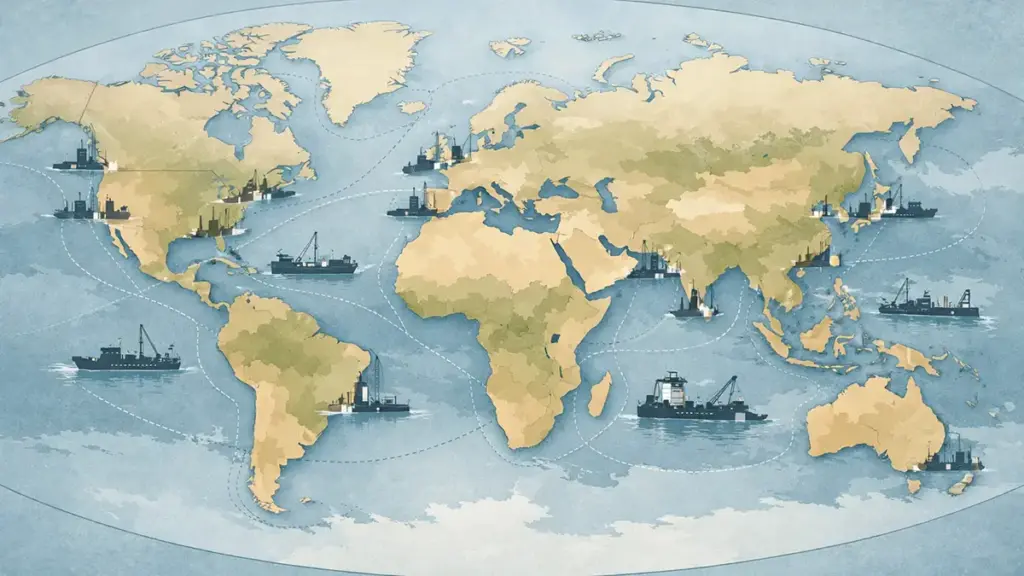
- The Asia-Pacific region holds a dominant share—accounting for about 24% of global dredging market revenue in 2025—and is seeing strong expansion in China, India, Singapore, and Southeast Asia.
- North America emphasizes maintenance dredging and coastal resilience.
- Europe balances the needs of inland waterways with offshore wind infrastructure.
- The Middle East & Africa region shows moderate growth, with port expansion projects in the Gulf states and across Africa.
- Latin America & South America sustain activity tied to river logistics and coastal port initiatives.
These regional insights add granularity to the 2026-2030 market forecasts, helping stakeholders tailor strategies by geography.
Competitive Landscape and Analyst Insights
Talking about competition in the dredging market is tricky because it isn’t one clean playing field. Some companies operate globally. Others survive almost entirely on local contracts. They rarely compete head-on, even though they’re technically in the same industry.
Large international contractors usually show up when projects are big, expensive, and politically sensitive. Port deepening, long coastal protection works, and large expansion programs. These jobs are less about price and more about whether a company can actually carry the risk. Fleet size matters. Financing matters. Experience with regulators matters.
Smaller and regional operators work very differently. Much of the ongoing dredging work never reaches the global players at all. Maintenance projects, inland waterways, and environmentally sensitive zones often stay local. Knowing how approvals work and how sediment behaves in a specific area can matter more than owning the biggest vessels.
Some patterns keep repeating across the industry. Fleets are slowly being upgraded, mostly because fuel costs and environmental rules leave little choice. Partnerships happen when risk gets uncomfortable. Public-private structures are used when governments want projects completed without carrying the entire burden themselves.
If you step back and look at analyst insights, the message is not about aggressive growth. It’s about balance. Companies spread across maintenance, capital, and environmental work tend to hold up better. The pressure points are familiar too. Delays. Rising costs. Skilled labor that’s hard to find. None of this is new, but it shapes decisions.
This is why most market forecasts for 2026-2030 don’t assume dramatic change. Demand is there. Execution is the variable.
Challenges and Constraints Affecting Market Forecasts
Growth in the dredging market is supported by long-term demand, but it is not without friction. Several constraints continue to shape how optimistic or conservative market forecasts 2026-2030 tend to be.
Regulatory and Environmental Compliance
Permitting remains one of the biggest challenges. Environmental impact assessments, stakeholder consultations, and regulatory approvals often take longer than expected. Even when funding is in place, projects can be delayed for months or years. These delays do not eliminate demand, but they do affect when revenue is realized.
Cost and Labor Pressures
Operating costs have become less predictable. Fuel prices fluctuate, and dredging is energy-intensive by nature. At the same time, there is a limited pool of skilled operators, engineers, and vessel crews. Labor shortages increase project risk and put pressure on timelines, leading to more cautious projections.
Supply Chain and Equipment Delivery
Dredging equipment has long lead times. New vessel construction, specialized components, and aftermarket parts are not quickly replaced. Any disruption in supply chains can limit how fast capacity is deployed, particularly for large or technically complex projects.
Taken together, these constraints help explain why analyst insights often emphasize stability and execution risk rather than rapid expansion when discussing the outlook for the dredging sector.
Future Outlook: 2026–2030 Opportunity Landscape
Looking ahead, the dredging market is expected to move forward steadily rather than dramatically. Most projections assume continuity, supported by trade demand, infrastructure spending, and climate-related projects. This is why growth expectations in market forecasts 2026-2030 tend to be measured rather than aggressive.
Consensus Forecast Summary
Across different models, the direction is broadly the same. The market continues to expand, but without sharp spikes. Maintenance dredging remains the foundation, while capital projects and climate resilience work add incremental growth. Exact values for 2030 vary by source, but confidence in continued demand is consistent.
Emerging Opportunities
Key areas include:
- Climate resilience investments
- Digitized dredging operations
- Regional infrastructure corridors
These tailwinds create robust opportunities for contractors and investors.
Risks and Uncertainties
Despite stable fundamentals, uncertainty remains. Geopolitical tension can affect trade volumes. Environmental policy changes can alter project approval timelines. Economic slowdowns may delay, but not eliminate, infrastructure investment. These factors are built into most long-range assessments of the dredging market.
Strategic Planning Imperatives Through 2030
The outlook for the dredging market toward 2030 is less about a single conclusion and more about how stakeholders prepare. The next few years reward planning that is realistic, flexible, and based on execution rather than optimism.
Technology choices matter, but only when they support long-term performance and compliance, not just short-term efficiency. Operators who align digital tools with measurable outcomes tend to manage risk more effectively over time.
Service models also need balance. Companies that rely solely on large capital projects face uneven cycles, while those that spread capital across maintenance, capital, and environmental work are generally more stable. This diversification shows up repeatedly in analyst insights.
Regional focus is another key factor. Growth is not uniform, and decisions need to reflect local trade patterns, environmental exposure, and regulatory environments. Using regional data to guide investment helps avoid overextension.
Finally, climate adaptation is no longer a separate category. It is becoming part of standard project planning, influencing scope, timelines, and funding structures. Businesses that integrate this reality into decision-making are better positioned for the years ahead.
In this environment, dependable market forecasts 2026-2030 provide direction, but execution determines outcomes. Through timely news, industry data, and expert commentary, PD Wire functions as a practical marketplace for pump and dredge news, supporting informed decisions in a complex and evolving global sector.